Dorelink
Dorelink
Dorelink
Explore our premium-grade optical transceiver modules, BiDi links, DWDM solutions, and precision hardware engineered for seamless network integration.
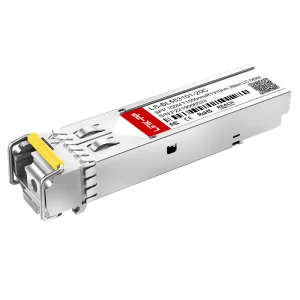
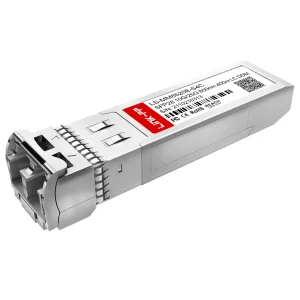
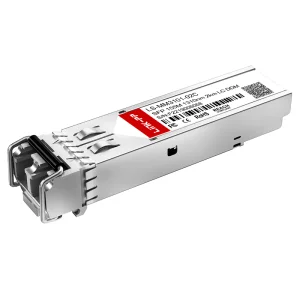
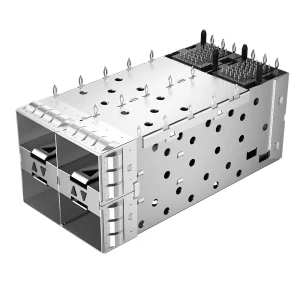
Analyzing the evolution of fiber optical amplification, DWDM long-haul networks, AI datacenter topologies, and strategic advantages of Chinese manufacturing ecosystems.
In modern optical transport networks (OTN), signal attenuation remains the primary bottleneck for long-span transmission. Optical Fiber Amplifiers, particularly Erbium-Doped Fiber Amplifiers (EDFA), Ytterbium-Doped Fiber Amplifiers (YEDFA), and Semiconductor Optical Amplifiers (SOA), eliminate the need for costly Optical-Electrical-Optical (O-E-O) conversions. By amplifying optical signals directly in the light domain across C-band and L-band spectra, amplifiers unlock petabit-scale capacities across transoceanic and terrestrial networks.
Optical Amplifiers and Optical Transceivers represent the dual pillars of modern optical backbones. While high-speed transceivers (ranging from 1.25G SFP, 25G SFP28, 40G QSFP+ up to 400G QSFP-DD) handle modulation, multiplexing, and localized electro-optic conversion, optical amplifiers maintain signal fidelity over tens to thousands of kilometers. China's integrated supply chain delivers unified compatibility between active amplification units and passive/active transceivers.
The hyper-expansion of Artificial Intelligence (AI) and Machine Learning (ML) clusters demands unprecedented bandwidth and microsecond-level latency. Distributed AI compute nodes rely on DWDM amplification and ultra-low noise amplifiers to interconnect massive GPU farms. Chinese wholesale manufacturing offers global enterprise procurement managers access to cutting-edge gain-flattened EDFAs and high-density transceivers engineered to withstand non-stop industrial operations.
When selecting a wholesale Optical Fiber Amplifier supplier, key technical evaluation vectors extend beyond raw gain (dB). Procurement teams must evaluate Noise Figure (NF < 4.5 dB for pre-amplifiers), Gain Flatness (< ±0.5 dB across 1528–1563nm), and Saturation Output Power ($P_{sat}$ up to +37 dBm for high-power YEDFA boosters). Dorelink’s manufacturing control ensures minimal amplified spontaneous emission (ASE) noise, directly maximizing total optical signal-to-noise ratio (OSNR).
China has established itself as the world’s undisputed epicenter for optical communication R&D, precision manufacturing, and component mass production.
Through complete vertical integration—from optical sub-assembly (OSA), TO-can packaging, cleanroom SMT line automation, to finished product burn-in testing—China suppliers offer a 30% to 50% cost advantage over Western counterparts without compromising optical reliability or Multi-Source Agreement (MSA) standards.
Global network topology demands customized firmware, specialized optical filtering, tailored gain bands (C-band, L-band, single-channel or multi-channel), and proprietary EEPROM coding. Chinese wholesale manufacturers deliver rapid prototyping cycles with custom labeling and casing within days.
Leveraging dense industrial clusters in Shenzhen, Wuhan (Optics Valley), and Dongguan, component sourcing—including pump lasers, isolators, wavelength division multiplexers (WDM), and photodetectors—is streamlined, guaranteeing minimal lead times even during global supply crunches.
A rigorous engineering overview comparing fundamental amplifier topologies, operational wavelengths, and transceiver module classes.
| Technology Category | Operational Wavelength | Typical Gain / Power Output | Noise Figure (NF) | Primary Industrial Applications |
|---|---|---|---|---|
| C-Band Booster EDFA | 1528nm – 1565nm | 13 dBm to 23 dBm Output | < 5.0 dB | Transmitter side amplification in long-haul DWDM links & CATV. |
| Low-Noise Preamplifier EDFA | 1528nm – 1565nm | 35 dB to 45 dB Small Signal Gain | < 4.0 dB to 4.5 dB | Receiver side sensitivity enhancement in subsea & ultra-long span OTN. |
| In-Line Optical Amplifier | 1528nm – 1565nm / 1570-1610nm | 15 dB to 30 dB Gain | < 4.5 dB | Intermediate node amplification replacing costly regenerators. |
| High-Power YEDFA (CATV / FTTH) | 1545nm – 1565nm | 27 dBm to 37 dBm Output (Multi-Port) | < 5.5 dB | PON/FTTH overlay, multi-building broadband video distribution. |
| Semiconductor Optical Amplifier (SOA) | 1310nm (O-Band) / 1550nm | 15 dB to 25 dB Gain | < 6.5 dB | 100G/400G transceiver integration, fast optical switching. |
| 25G SFP28 DWDM Transceiver | 100GHz C-Band ITU Grid | 0 dBm to +4 dBm Output | N/A (PIN/APD Receiver) | 5G front haul, enterprise DCI, DWDM amplified networks up to 10km-80km. |
From core telecommunications infrastructure to smart grid automation, our optical products deliver bulletproof connectivity across critical applications.
National carrier networks rely on EDFA optical amplifiers paired with DWDM transceivers to transmit multi-terabit data streams across thousands of miles. By placing in-line amplifiers every 80km, carriers reduce equipment CAPEX while ensuring seamless long-haul performance.
Modern cloud architectures require seamless connection between physically separated datacenters. Utilizing high-rate 25G/100G/400G transceivers along with compact rackmount optical amplifiers, operators achieve zero-packet-loss DCI links with ultra-low latency.
High-power YEDFA multi-port amplifiers enable Internet Service Providers (ISPs) to split 1550nm optical video signals to thousands of residential subscribers across Gigabit Passive Optical Networks (GPON/XGS-PON), maximizing fiber reach.
Harsh industrial environments require extended-temperature optical transceivers (such as Hirschmann and Cisco compatible modules) alongside rugged optical repeater units. These guarantee reliable supervisory control and data acquisition (SCADA) in power substations.
Subsea fiber transport relies on ultra-stable, highly reliable preamplifiers and booster EDFAs engineered for unrepeatered submarine links, spanning hundreds of ocean kilometers to connect island nations and coastal hubs.
5G base station deployments leverage 25G BiDi and DWDM optical modules alongside compact optical gain blocks to backhaul massive mobile traffic to central processing units with strict phase synchronization.
Established in 2016, Dorelink Optical Communications Co., Ltd. is a premier high-tech enterprise specializing in the research, development, custom manufacturing, and global export of high-performance optical amplifiers, optical transceiver modules, and passive connectivity hardware.
Operating an expansive 18,500m² modern manufacturing plant, Dorelink houses high-speed automated SMT lines, advanced optical spectral analyzers, and automated temperature burn-in chambers. With over 12 years of industry experience and 7 years of direct international trade expertise, we serve telecommunications carriers, cloud operators, system integrators, and Fortune 500 equipment vendors across North America, Europe, Southeast Asia, and the Middle East.

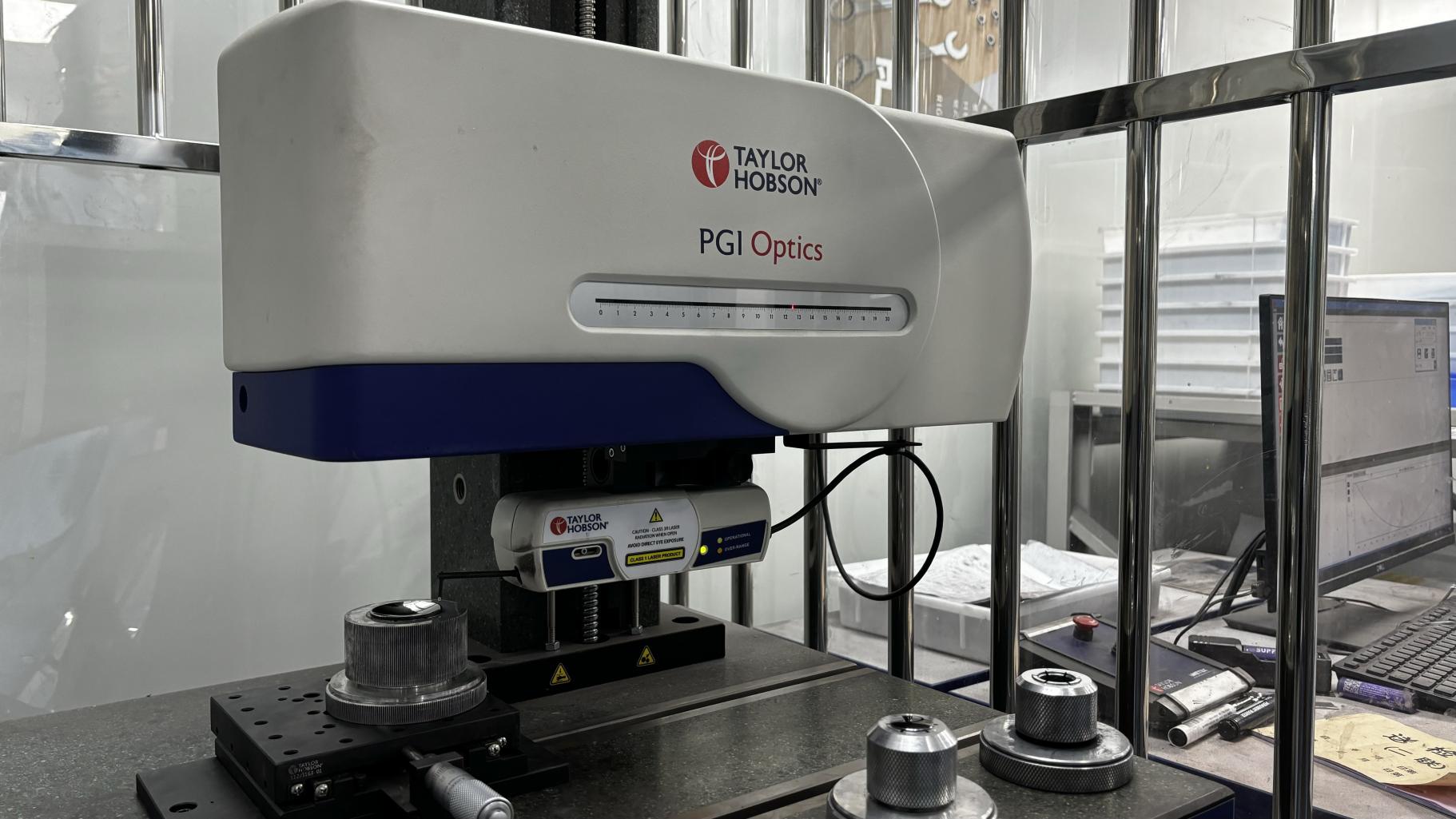
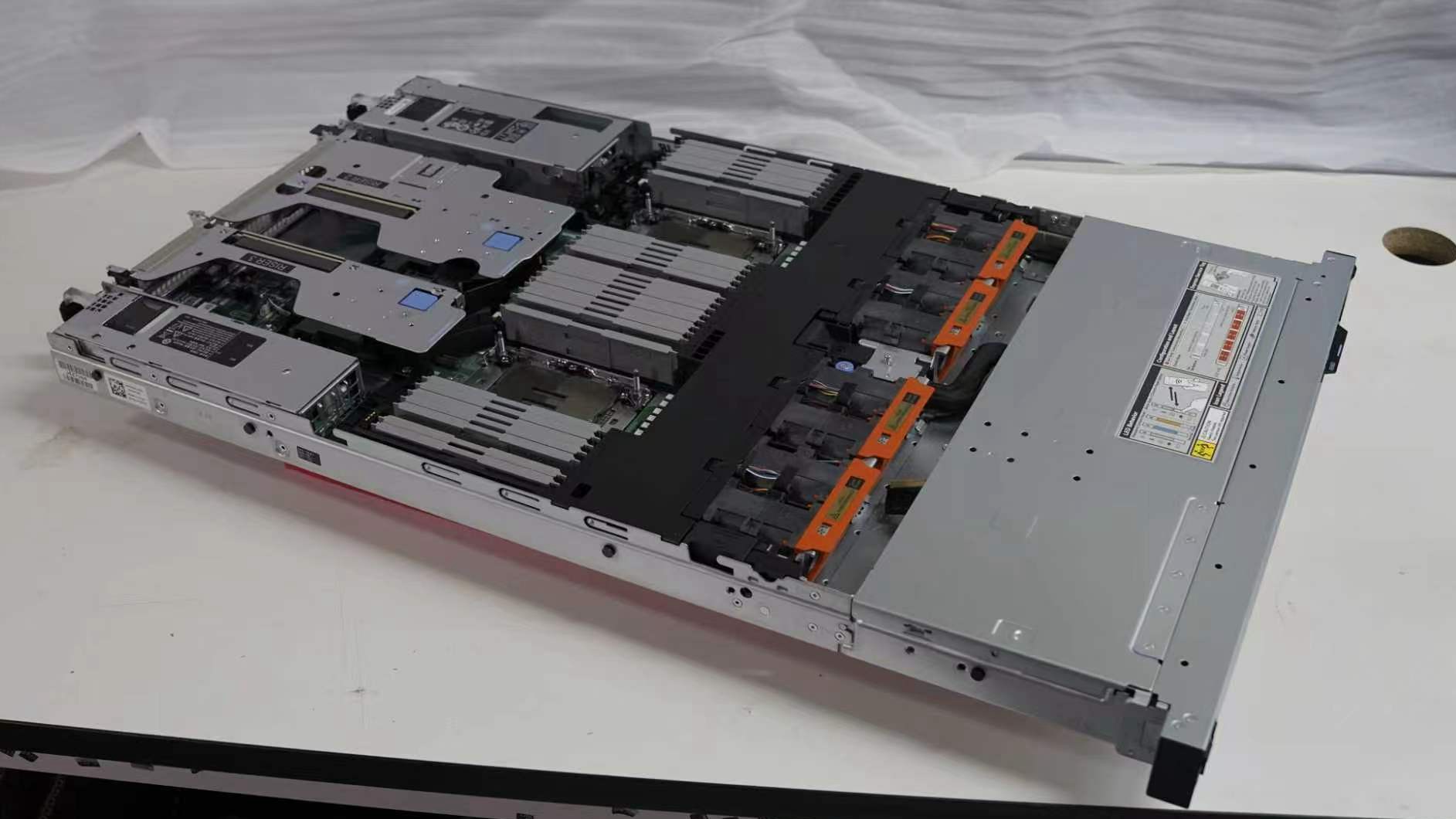
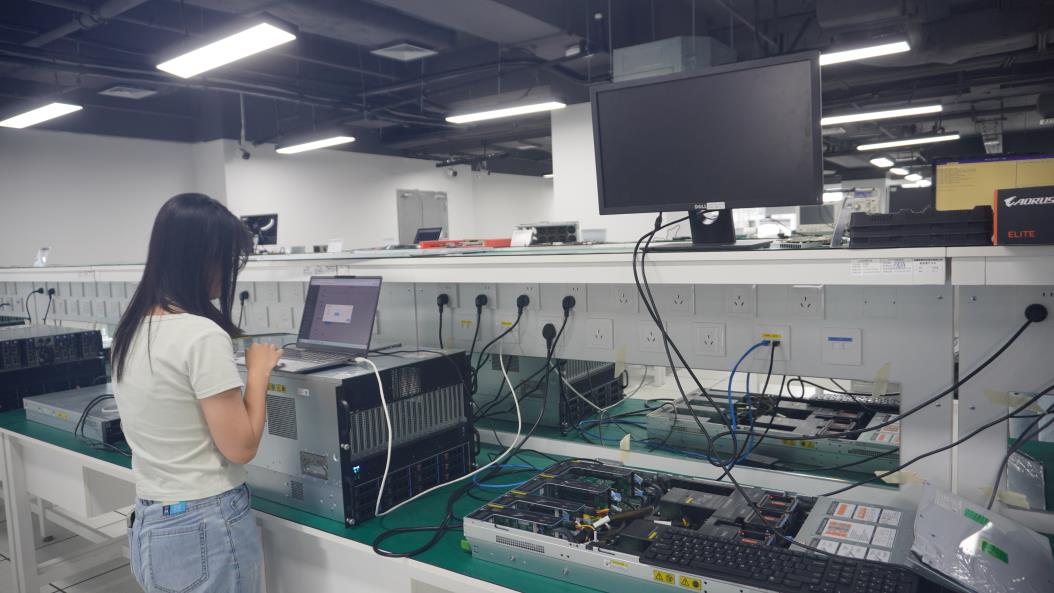

Zero-defect reliability is engineered into every component. Our 45 QC engineers execute multi-layer verification prior to dispatch.
100% inspection of critical raw materials, including laser diodes, avalanche photodiodes (APD), pump lasers, optical isolators, printed circuit boards (PCBs), and precision metal housing cages.
Real-time micro-soldering inspection, wire bonding validation, OSA alignment verification, and continuous monitoring across high-speed SMT surface-mount production lines.
Comprehensive evaluation of central wavelength, optical output power, side-mode suppression ratio (SMSR > 35dB), bit-error-rate (BER < 10⁻¹²), and eye-diagram spectral compliance.
Every industrial-grade module undergoes extreme temperature chamber testing (-40°C to +85°C) and multi-hour high-temperature aging to eliminate early-life electronic failures.
Transceivers and active amplification units are tested across over 100 enterprise switches (Cisco, Hirschmann, Juniper, Huawei, Arista, Dell, Mikrotik) to ensure 100% plug-and-play EEPROM compatibility.
Final visual inspection, ESD-safe anti-static vacuum packaging, custom barcode serialization, and box drop testing guarantee pristine delivery to global destinations.
A structured blueprint for telecommunications buyers, system integrators, and distributors seeking high-volume optical components.
We provide tailored DOM/DDM firmware configurations, custom vendor IDs, serial number mapping, and protocol flags to guarantee seamless integration with proprietary network operating systems.
From 1U rackmount EDFA chassis designs to customized SFP metal housing finish, laser-etched logos, and anti-tamper security labels, our R&D engineering team turns specs into reality.
Enjoy competitive volume-tier pricing, DDP/FOB/EXW shipping arrangements via DHL, FedEx, UPS, or air freight, backed by a comprehensive 3-year warranty and lifetime technical support.
Addressing core technical, sourcing, and operational questions for optical fiber amplifiers and optical transceiver components.
A booster amplifier is installed immediately after the optical transmitter to boost launched power (+13 to +23 dBm). An in-line amplifier is placed periodically along long-haul fiber spans to compensate for attenuation. A pre-amplifier is positioned directly before the receiver to increase weak signal sensitivity (-35 dBm down to usable levels) while adding minimal noise figure.
China features a highly concentrated optical electronics supply chain cluster. High-degree SMT automation, domestic optical chip packaging, and high manufacturing volume drastically reduce unit production costs without compromising stringent Telcordia GR-468-CORE reliability standards.
Yes. Dorelink transceivers undergo rigorous host-board compatibility verification. We program custom EEPROM code with exact vendor IDs, part numbers, and checksums to ensure error-free recognition on Cisco, Hirschmann, Juniper, Huawei, and other major OEM platforms.
In multi-channel DWDM systems, different wavelength channels experience unequal amplification gain. Gain Flatness (typically < ±0.5 dB) ensures that all C-band or L-band channels are amplified uniformly, preventing channel power imbalance and signal distortion over multi-stage amplification hops.
We provide comprehensive customization including tailored optical output power, custom DDM firmware parameters, unique casing geometry, private label branding, specialized fiber connector types (LC, SC, ST, FC, MPO), and custom ESD packaging.
Standard optical transceivers are generally shipped within 3 to 5 business days. Customized EDFA amplifiers, DWDM modules, or high-volume OEM orders typically take 1 to 2 weeks, supported by our 18,500m² factory production capacity.
Single-mode modules (SMF) use 9/125µm fiber cores with laser wavelengths (1310nm/1550nm) designed for long-distance transmissions (10km up to 100km+). Multi-mode modules (MMF) use 50/125µm or 62.5/125µm cores with 850nm VCSEL lasers tailored for short-range interconnects up to 550m.
All Dorelink optical amplifiers and transceiver products are backed by a standard 3-year replacement warranty, compliance certifications (CE, FCC, RoHS, ISO9001), and 24/7 technical engineering support for network deployment troubleshooting.
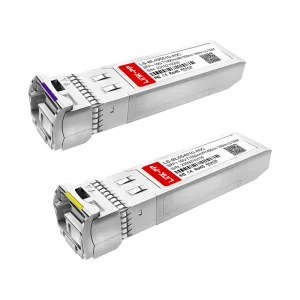
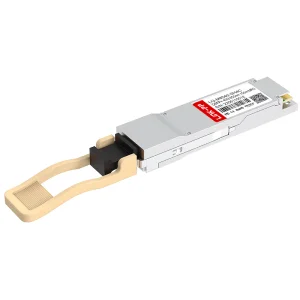
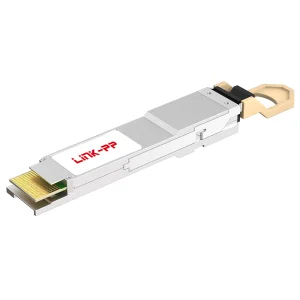
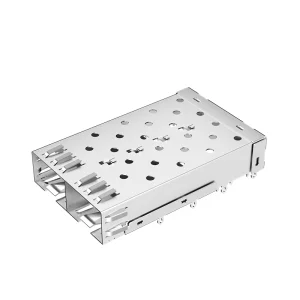
Explore our complete range of single-mode, multi-mode, BiDi, high-speed 40G/400G QSFP, and industrial cage connectors.