Dorelink Dorelink

10 Best DWDM Transceivers for Global Buyers?

Time:2026-10-19 Author:Madeline
0%

Global buyers face a crowded DWDM transceiver market, where specifications can look impressive but perform differently in real networks. A module rated for 80 kilometers may struggle across aging fiber, repeated connectors, or high summer temperatures. This guide examines ten leading options through practical criteria, including wavelength stability, reach, power consumption, interoperability, monitoring support, and total ownership cost.

Steve Alexander, a longtime optical-networking expert and former Ciena technology leader, has said, “Optical networks must be designed for change, not merely for today’s traffic.” That principle remains valuable. A reliable DWDM transceiver should support present capacity while leaving room for future upgrades, wavelength expansion, and changing traffic patterns. Buyers should also verify vendor documentation, coding compatibility, operating temperature, and warranty terms before ordering.

Price still matters. It is not everything.

In field deployments, a cheaper module can create unexpected expenses through alarms, replacements, or difficult troubleshooting. Conversely, the most expensive product may offer features a smaller data center never uses. This comparison therefore avoids treating one specification as decisive. Testing methods differ, product names change, and regional supply conditions can affect the final choice. Some conclusions may need revision as manufacturers release newer firmware or optical designs. That uncertainty is worth acknowledging. The best DWDM transceiver is not simply the fastest or longest-reaching model. It is the one that fits the fiber route, equipment ecosystem, maintenance capability, and long-term business plan.
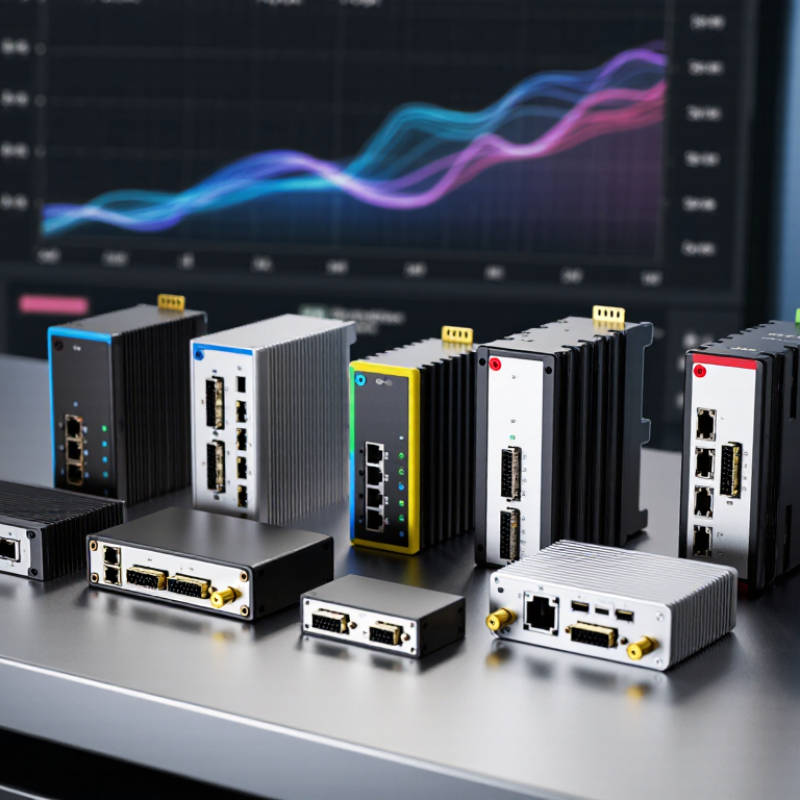
10 Best DWDM Transceivers for Global Buyers?

What DWDM Transceivers Are and How They Support Global Networks

DWDM transceivers are optical modules that carry multiple data channels over one fiber pair. They convert electrical signals into precise light wavelengths. A multiplexer then combines these wavelengths into a dense optical stream. At the far end, a demultiplexer separates them again. This design increases fiber capacity without installing new cables.

In global networks, DWDM transceivers connect data centers, carrier sites, and international landing stations. Long-reach models can support hundreds of kilometers with suitable amplifiers and dispersion management. Coherent modules often include digital signal processing and forward error correction. These features help maintain stable connections across noisy or extended fiber paths. Some modules also report temperature, transmit power, and receive power through digital monitoring.

Field testing matters. A specification sheet may look complete, yet real performance depends on fiber quality, optical loss, and line-system compatibility. I have seen links pass a bench test but lose margin after several patch panels. That risk is easy to underestimate. Buyers should verify wavelength grids, reach, connector type, power requirements, and management support before deployment. Interoperability also needs careful checking, especially when transceivers and optical systems come from different suppliers. A practical test with actual equipment remains more reliable than assumptions. Mistakes still happen. Careful records and measured optical budgets reduce them.

Key Specifications for Comparing DWDM Transceiver Performance

For global buyers, DWDM transceiver performance starts with traffic reality, not headline speed. ITU Facts and Figures 2023 counted 5.4 billion internet users, roughly 67% of the world’s population. The Annual Internet Report projected 396 exabytes of monthly IP traffic in 2022. That pressure makes capacity planning practical. Compare 100G, 200G, and 400G modules by usable throughput, not label alone. Check the wavelength plan. ITU-T G.694.1 grid spacing, typically 50 or 100 GHz, affects channel density and filtering tolerance. More channels are not automatically better.

I would verify modulation, baud rate, FEC, and supported reach together. A 400G optic using higher-order modulation may need stronger signal quality than a lower-rate design. Review OSNR requirements, dispersion tolerance, and receiver sensitivity across the actual fiber path. Laboratory reach can mislead. Measure insertion loss, connector count, and amplifier spacing. Temperature ratings also matter in roadside cabinets, where airflow is limited. Digital diagnostics should expose transmit power, receive power, voltage, and temperature. These readings turn a dark link into a diagnosable link.

Power consumption deserves equal attention. A small wattage difference becomes significant across hundreds of wavelengths. Compare maximum watts, not typical watts. Confirm interoperability across line systems, firmware, and management protocols before purchase. Independent test reports help, but supplier curves still need field validation. I have seen clean bench results fail after patch-panel changes. That is an uncomfortable reminder. For global deployment, record compliance, warranty terms, coding options, and replacement lead time. The best specification sheet is useful only when operations can trust it.

Ten Leading DWDM Transceiver Options for International Buyers

Ten Leading DWDM Transceiver Options for International Buyers

Global buyers now need more than headline capacity. The ten leading options include 100G CFP2-DCO, 100G QSFP28 DWDM, 200G QSFP56 coherent, 300G QSFP-DD coherent, 400ZR, 400ZR+, 400G ZR with extended reach, 600G coherent, 800G coherent, and tunable DWDM modules. Each serves a different distance, power, and network role. Short links may favor compact 400ZR modules. Regional routes often need stronger forward-error correction and tunable wavelengths.

The Omdia Optical Network Hardware Report 2024 identifies coherent pluggables as a major transport upgrade path. Cignal AI reported that 400ZR-class shipments passed one million units by 2024. That growth matters for international procurement. Still, volume does not guarantee compatibility. Buyers should verify OpenZR+, CMIS support, wavelength grids, line-system profiles, and host-port behavior. Check thermal performance.

Field testing also deserves attention. A module may reach its stated distance in controlled conditions, yet perform differently across aging fiber, connector loss, and mixed vendors. The ITU-T G.698.2 framework remains useful for multichannel interoperability planning. Power draw matters in dense cabinets. So does local replacement time. I would compare measured optical margins, not only datasheet reach. This is where many purchasing decisions become less certain. Seven-year assumptions can be optimistic.

10 Best DWDM Transceivers for Global Buyers? - Ten Leading DWDM Transceiver Options for International Buyers

A technology-focused comparison of widely adopted coherent DWDM transceiver configurations

No. DWDM Transceiver Option Nominal Line Rate Typical Reach Wavelength / Grid Modulation and FEC Host Interface Typical Application
1 100G Coherent CFP-DP 100 Gb/s Up to 500–1,000 km, depending on line system and fiber conditions C-band; tunable on a 50 GHz or 100 GHz DWDM grid DP-QPSK with soft-decision FEC 100GbE or OTU4 client interface Long-haul transport, regional networks, and legacy coherent line upgrades
2 100G Coherent CFP2-DCO 100 Gb/s Up to approximately 800 km in suitable amplified systems C-band; tunable DWDM operation DP-QPSK with vendor-configured soft-decision FEC 100GbE or OTU4 Compact metro, regional, and data-center interconnect platforms
3 200G Coherent QSFP56-DCO 200 Gb/s Approximately 400–800 km, depending on baud rate and optical margin C-band; tunable 50 GHz or flexible-grid channel spacing DP-16QAM or DP-QPSK; soft-decision FEC 200GbE, 2 × 100GbE, or OTN client options Metro core, regional transport, and high-capacity enterprise interconnects
4 200G Coherent QSFP-DD 200 Gb/s Up to approximately 300–600 km in optimized metro and regional networks C-band; flexible-grid DWDM DP-16QAM or DP-QPSK with integrated FEC 200GbE or breakout client configurations High-density router and switch line cards requiring pluggable optics
5 300G Coherent QSFP-DD 300 Gb/s Approximately 200–500 km, depending on fiber span loss and ROADM path C-band; flexible channel spacing, commonly 75 GHz or wider Higher-order QAM, commonly DP-16QAM, with soft-decision FEC 300GbE or configurable Ethernet client interfaces Metro-regional networks where higher capacity is required without a full 400G design
6 400ZR QSFP-DD Approximately 400 Gb/s Up to about 120 km on suitable amplified point-to-point or single-span links C-band; 75 GHz channel spacing is commonly used DP-16QAM with standardized 400ZR interoperability requirements 400GbE Data-center interconnects and short regional links without multi-span regeneration
7 400G OpenZR+ QSFP-DD 400 Gb/s Typically 300–1,000 km, depending on implementation, baud rate, and FEC C-band; flexible-grid DWDM DP-16QAM or DP-8QAM with enhanced soft-decision FEC 400GbE Metro, regional, and extended data-center interconnect applications
8 400G Coherent CFP2-DCO 400 Gb/s Approximately 500–1,000 km in suitable long-haul systems C-band; tunable flexible-grid operation DP-16QAM, DP-8QAM, or DP-QPSK depending on reach mode; soft-decision FEC 400GbE or OTN client interfaces Transport shelves and network equipment with CFP2-DCO cages
9 600G Coherent OSFP 600 Gb/s Approximately 300–800 km, depending on selected baud rate and modulation C-band; flexible-grid DWDM, commonly using 75 GHz or wider channels DP-16QAM or DP-64QAM in shorter-reach modes with soft-decision FEC 400GbE, 600GbE, or configurable high-speed Ethernet High-capacity regional transport and large-scale data-center interconnects
10 800G Coherent OSFP 800 Gb/s Approximately 80–400 km in common pluggable coherent deployments C-band; flexible-grid operation, often requiring a wide optical channel DP-16QAM or higher-order coherent modulation with implementation-specific FEC 800GbE Next-generation data-center interconnects and high-capacity metro networks

Note: Reach figures are typical engineering ranges rather than guaranteed performance. Actual distance depends on fiber type, span loss, amplifier noise, ROADM count, channel spacing, dispersion, launch power, modulation mode, and the selected FEC profile.

Compatibility, Standards, and Network Integration Considerations

Choosing the 10 best DWDM transceivers starts with compatibility, not headline speed. Verify the exact wavelength grid, channel spacing, reach, fiber type, and connector polish. ITU-T G.694.1 defines widely used frequency grids, while G.698.1 addresses multivendor DWDM interfaces. These standards reduce integration risk, but they do not guarantee perfect interoperability.

A 2024 optical networking market report from Dell’Oro Group linked stronger demand to data-center expansion and higher-capacity links. That trend makes 400G and 800G modules attractive, yet power limits remain practical concerns. Check line-system budgets, chromatic dispersion, forward-error correction, and temperature ratings. Digital diagnostics should expose transmit power, receive power, bias current, and module temperature. Field testing shows that a transceiver can pass a laboratory test but fail under long-haul fiber conditions. Specifications can mislead.

Tips: Request a coded compatibility matrix before purchase. Confirm firmware support and host-port configuration. Test two modules across the intended fiber span. Keep optical margins conservative. A small mismatch in FEC or wavelength planning can create intermittent alarms, not an immediate outage. Independent certification and traceable test records strengthen supplier reliability. I would also review actual deployment logs, because published performance rarely captures every patch panel, splice, or aging amplifier.

Pricing, Supply, and Selection Factors Across Global Markets

Global buyers comparing the 10 best DWDM transceivers should start with regional pricing, not headline specifications. LightCounting’s 2024 Optical Transceiver Market Forecast reports continuing growth in high-speed optical demand through 2028, driven by cloud and artificial intelligence networks. Prices vary sharply by wavelength, reach, modulation, and order volume. A 400G coherent module may cost several times more than a 100G unit. Customs duties, testing fees, and local warranties can also change the delivered price.

Supply reliability is equally important. Dell’Oro’s Optical Transport market research continues to identify strong investment in coherent transmission and data-center interconnection. However, availability can differ between North America, Europe, and Asia. Buyers should request confirmed lead times, production capacity, and at least two qualified sources. Ask for serial-level test reports. Do not rely only on a distributor’s stock label.

Selection should match the network’s real conditions. Check fiber type, supported bands, dispersion tolerance, power consumption, and compatibility with the host platform. The Omdia Optical Network Hardware and Components research highlights the growing importance of pluggable coherent optics in reducing space and power requirements. Still, lower power does not always mean lower total cost. I have seen projects overlook cooling limits and lose their expected savings. A careful comparison should include five-year maintenance, failure replacement, firmware support, and regional technical service. Sometimes the cheapest module is simply the riskiest purchase.

FAQS

How should buyers compare DWDM transceiver capacity?

Compare usable throughput, not printed speed alone. Review traffic demand, channel count, and actual fiber utilization. More capacity is not always better.

Which optical specifications need joint evaluation?

Check modulation, baud rate, forward-error correction, reach, and receiver sensitivity together. A higher rate may need cleaner signal quality. Laboratory reach can mislead.

Why does wavelength spacing matter?

Common channel spacing includes 50 or 100 GHz. Spacing affects channel density, filtering tolerance, and wavelength planning. More channels are not automatically better.

What should be measured across the real fiber route?

Measure insertion loss, connector count, splice loss, dispersion, and amplifier spacing. Include aging fiber and patch panels. Measure the path.

Which module types suit different network distances?

Compact 400G modules may suit shorter links. Regional routes may need tunable wavelengths and stronger error correction. Long routes need verified optical margins.

What diagnostic information should a transceiver provide?

Digital diagnostics should show transmit power, receive power, voltage, bias current, and temperature. These readings make hidden link problems visible. Useful, but imperfect.

How important are power consumption and temperature ratings?

Compare maximum power, not typical power. Small differences multiply across hundreds of wavelengths. Check airflow limits in roadside or crowded cabinets.

How can buyers reduce compatibility problems?

Request a coded compatibility matrix before purchase. Confirm wavelength grids, firmware, host ports, management protocols, and line-system profiles. Test two modules over the intended span.

Conclusion

This guide explains how a DWDM transceiver enables high-capacity data transmission by carrying multiple optical wavelengths over a single fiber pair, making it essential for long-distance, metropolitan, and international networks. It outlines the main specifications buyers should compare, including transmission distance, wavelength range, channel spacing, data rate, optical power, receiver sensitivity, power consumption, form factor, and operating temperature. Understanding these factors helps network planners match transceivers with system capacity, reach, and reliability requirements.

The article also presents ten leading DWDM transceiver options for global buyers, focusing on performance categories rather than brand promotion. It discusses compatibility with optical platforms, network standards, monitoring functions, and integration requirements, while highlighting the importance of interoperability testing. Finally, it reviews pricing, regional supply, warranty support, delivery times, and customization availability, helping organizations select a dependable solution that balances technical performance, deployment flexibility, total cost, and long-term network scalability.

Madeline

Madeline

Madeline is a dedicated marketing professional with a wealth of expertise in our company's core offerings. With a keen understanding of the industry, she brings a unique perspective to her role, consistently delivering high-quality content that highlights the superior aspects of our products. As......